Do you follow a healthy diet and try to avoid products containing artificial preservatives or dyes? Now it’s time to think about your skin—learn the differences between natural and organic cosmetics, and discover how choosing the right products can affect your skin’s health.
Today’s consumers know that skincare cannot be left to chance, and that making informed choices about cosmetics is a gesture of respect for the health of our skin—which is with us our entire lives, protects our organs from harmful external factors, removes harmful substances from the body, and synthesizes vitamin D. With such hard work, it deserves care and proper attention.
Check out: Natural methods for facial skin care after age 40
To paraphrase a classic: natural cosmetics or organic cosmetics? That is the question! Learn the key differences between these products, because although the terms “natural” and “organic” are often used interchangeably, there is a distinct difference between them.
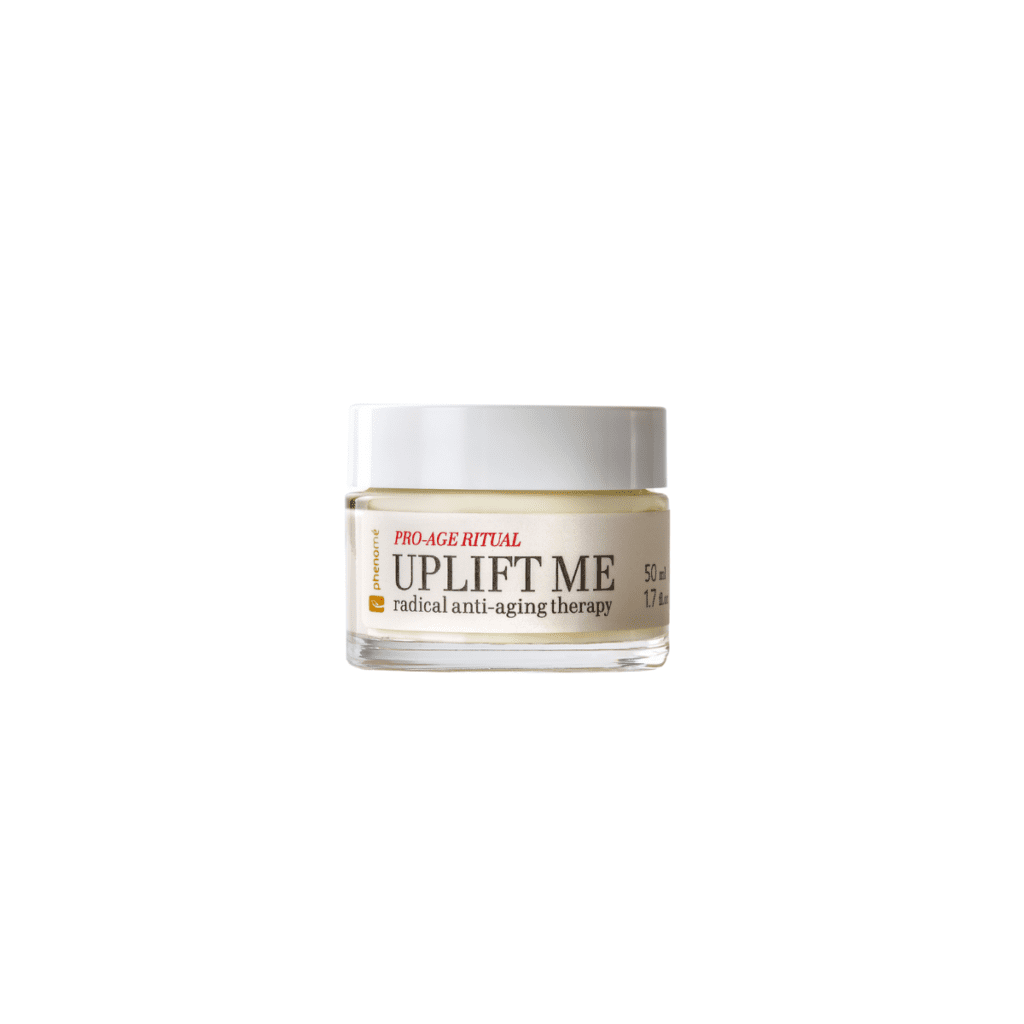
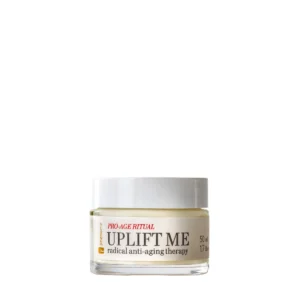
Lifting and soothing face cream for night and day UPLIFT ME
A cosmetic product is considered natural when it is made from ingredients of natural origin—plant-based, animal-based, or mineral-based. The active ingredients in this product that promote skin health and beauty include plant extracts, butters, and oils, as well as hydrosols—plant waters that are a byproduct of the essential oil extraction process. All these raw materials are sourced sustainably, with respect for the environment and without harming animals, which is an added benefit for conscious consumers. Furthermore:
How can we be sure that natural equals safe? That’s the job of laboratories and the specialists who work there—people who know how to extract from nature what is most valuable, effective, and safe.
Organic cosmetics are also based on natural ingredients, but it can be said that in this case, manufacturers go a step further—they emphasize ingredients sourced from organic farms that are cultivated without the use of synthetic pesticides, herbicides, sewage sludge, GMOs, and other synthetic substances—over 90% of the ingredients must come from certified organic farms.
These cosmetics must meet strict criteria regarding animal welfare and environmental safety. The basis for this is certification from organizations such as NaTrue, Ecocert, and the USDA.
In the case of organic cosmetics, the materials used to manufacture their packaging are also being shifted toward biodegradable materials.
In summary:
Check it out: Why choose natural cosmetics?
We’re starting to make conscious choices about the products we use because we know it’s important for our skin, our health, and… the planet. Natural and organic products are gaining increasing popularity in the cosmetics industry. They share many common features, such as “clean” ingredients, respect for the environment, a wealth of plant-based ingredients that are highly effective, and above all, safety, as they minimize the risk of irritation and allergies. However, there are differences between them.
Before you make the right decision for yourself, find out the difference between natural and organic cosmetics.
Natural vs. organic—ultimately, the choice comes down to personal preference. When looking for a cosmetic product with a high-quality, “clean” formula based on plant-derived ingredients, you can confidently choose a natural product that is made with respect for the environment and, above all, is a great ally for your skin. These products are suitable for all skin types, including sensitive skin.
Organic cosmetics are very similar, with the difference that they are produced in accordance with the principles of organic farming, animal welfare, and environmental protection.
If you don’t need a certified product, go ahead and choose a natural one—it’s also free of harsh ingredients, artificial fragrances, and GMOs.
Previous lowest price was 113,40 €.
Previous lowest price was 139,30 €.