
Have you ever wondered why hair care is so important in the summer? It’s all due to UV radiation, which we’re more exposed to when we’re enjoying the beautiful weather outdoors.
Sunlight is one of the environmental factors considered harmful to hair. It damages the cuticle layer and causes the hair cuticles to lift. This can lead not only to dryness but also to the breakdown of essential amino acids. The result is a loss of bounce, softness, and shine. Spending long hours in the sun without a hat poses a risk not only of heatstroke but also of your hair losing its shine, becoming dry, and visibly damaged. In such cases, long-term hair regeneration using specialized masks may be necessary.
There are several proven ways to protect your hair from the harmful effects of UV rays and give it the care it needs.
Summer Hair Care – Basic Tips:
Helpful tip (tip #5): If you notice the first signs of dryness or split ends, immediately incorporate products into your summer hair care routine that moisturize and repair your hair more effectively than your usual conditioners. Hair oils (especially coconut oil) and hair masks containing a combination of oils, shea butter, and proteins (oat, silk, keratin, or soy) are perfect for this.
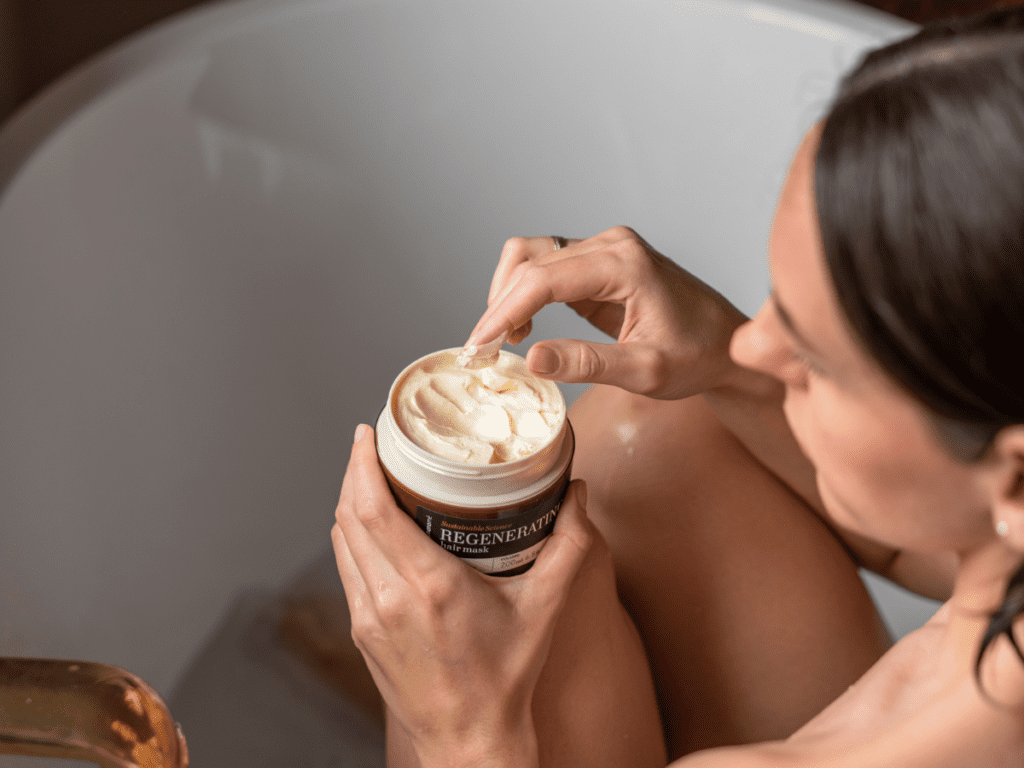
Simply apply them 1–2 times a week to slightly damp hair for 15 minutes (or 30–40 minutes if your hair is severely damaged). If you’re looking for a mask that leaves a pleasant, protective film on your hair without weighing it down, you might be interested in the REGENERATING Deeply Regenerating Mask for Dry, Damaged, and Frizzy Hair.
High-porosity and low-porosity hair have slightly different needs in the summer. High-porosity hair is most vulnerable to the harmful effects of UV radiation because its cuticle is naturally already lifted, making it more prone to moisture loss and damage. Caring for high-porosity hair is definitely more demanding, so it’s worth knowing what type of hair you have.
You can recognize high-porosity hair by the fact that:
If you’re still unsure, you can also try a simple experiment: pour water into a glass and see if the hair sinks to the bottom quickly. If it does, there’s a good chance it’s high-porosity hair. Low-porosity hair usually stays near the surface of the water longer.
High-porosity hair deserves special care in the summer.
Of all the tips we’ve described in the “Summer Hair Care” section, the most important one for high-porosity hair is using natural plant oils. Applying them regularly can improve moisture levels in the hair shaft and prevent breakage. It also reduces split ends and makes your hair easier to comb.
In addition, caring for high-porosity hair should also include the following:
Although this type of hair is less demanding and healthier than high-porosity hair, which is prone to damage, it still needs your care. If you don’t meet its needs, it may start to exhibit the characteristics of high-porosity hair.
Overusing heavy styling products can damage your hair. Frequent heat styling—such as blow-drying, straightening, or curling—can also quickly damage your hair. Additionally, it’s important to protect your hair from the sun and cold. If you dye your hair, be sure to use protective products designed specifically for colored hair.
Low-porosity hair also requires special care. Although it is healthy and strong, it can be difficult to care for because the ingredients in hair care products remain on the surface of the hair and weigh it down. This can ultimately lead to an oily scalp.
You can tell if your hair is low-porosity because:
If your hair is heavy and limp, you need a shampoo that removes excess oil and impurities. It’s important to avoid SLES, SLS, and parabens, which irritate and dry out the scalp. This reaction can cause dandruff. A shampoo for low-porosity hair should therefore help maintain the scalp’s balance. In addition to deep cleansing, it’s also good if it gently moisturizes.
Phenomé Rebalance Shampoo, formulated with gentle cleansing agents and organic extracts, soothes an irritated scalp. It revitalizes dry ends, leaving your hair soft and manageable.
When it comes to low-porosity hair, less is more. So instead of using conditioner every day, opt for a weekly hair mask.
The Phenomé Purifying Mask, made with white clay, rice powder, and ground almonds, removes excess sebum and styling products from your hair and exfoliates the scalp. After this treatment, your hair will feel light, voluminous at the roots, and moisturized.
If you have low-porosity hair: