
Why might your current gels not be enough?
Daily intimate hygiene should support the body’s natural defense mechanisms. Yet more and more women are experiencing recurring discomfort, irritation, or an imbalance in the vaginal microbiome.
The cause is often not a lack of hygiene, but rather improper hygiene practices. Excessive or harsh cleansing can weaken the intimate microbiome—the first line of defense against microorganisms.
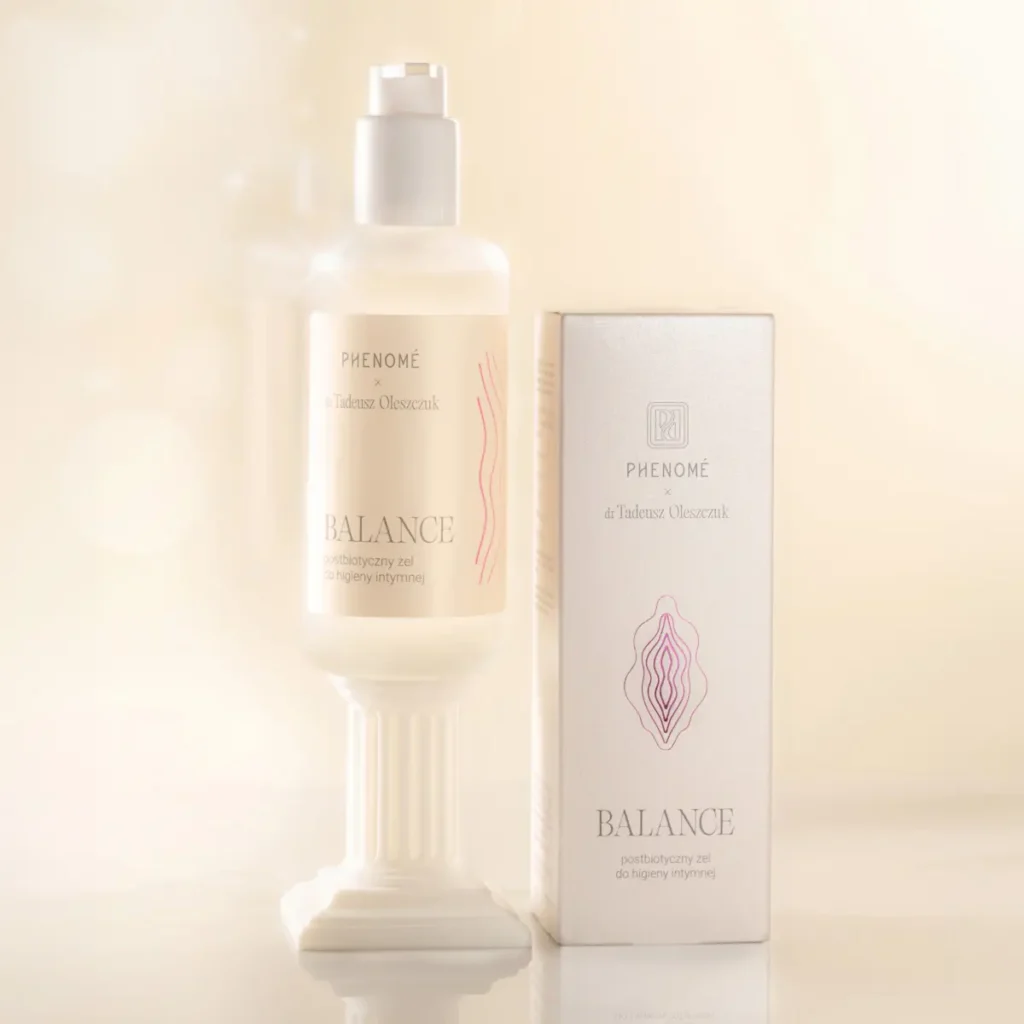
Postbiotics are emerging as a new trend in skincare.
The genital area is not sterile, nor should it be. Its balance depends on a dynamic ecosystem of microorganisms, dominated by bacteria of the genus Lactobacillus.
Here they are:
The problem arises when skincare focuses solely on “eliminating bacteria.” Harsh cleansers don’t distinguish between beneficial bacteria and harmful ones. Washing away beneficial bacteria leads to an increase in pH and a weakening of the skin’s natural barrier.
This may result in:
Cleanliness, understood as intensive washing, does not always equate to good health.
Many conventional products contain:
These ingredients can:
The skin remains clean but lacks regenerative support. A burning or tightening sensation after washing is a sign that the protective barrier has been weakened.
Modern intimate hygiene should not only cleanse but also protect.
Postbiotics are bioactive metabolites produced by probiotic bacteria. Unlike probiotics, they do not contain live microorganisms.
As a result:
Postbiotics include, among others:
In intimate care, their role is to support the skin’s natural protective mechanisms, not to replace the microbiome.
An acidic pH is a key component of biological defense.
Lactic acid helps maintain an environment conducive to Lactobacillus bacteria.
Panthenol supports skin regeneration and provides a soothing sensation.
Postbiotics help maintain the stability of the microbiome and limit conditions that promote the overgrowth of pathogens.
This approach allows us to take preventive action—before a problem arises.
Even the best formula needs the right context.
To enhance the gel’s effectiveness:
When it comes to intimate hygiene, less is often more.
Modern intimate care should focus on supporting the microbiome rather than eliminating it. Postbiotics provide stable, safe support for the body’s natural defense mechanisms.
Text: Dr. Tadeusz Oleszczuk