
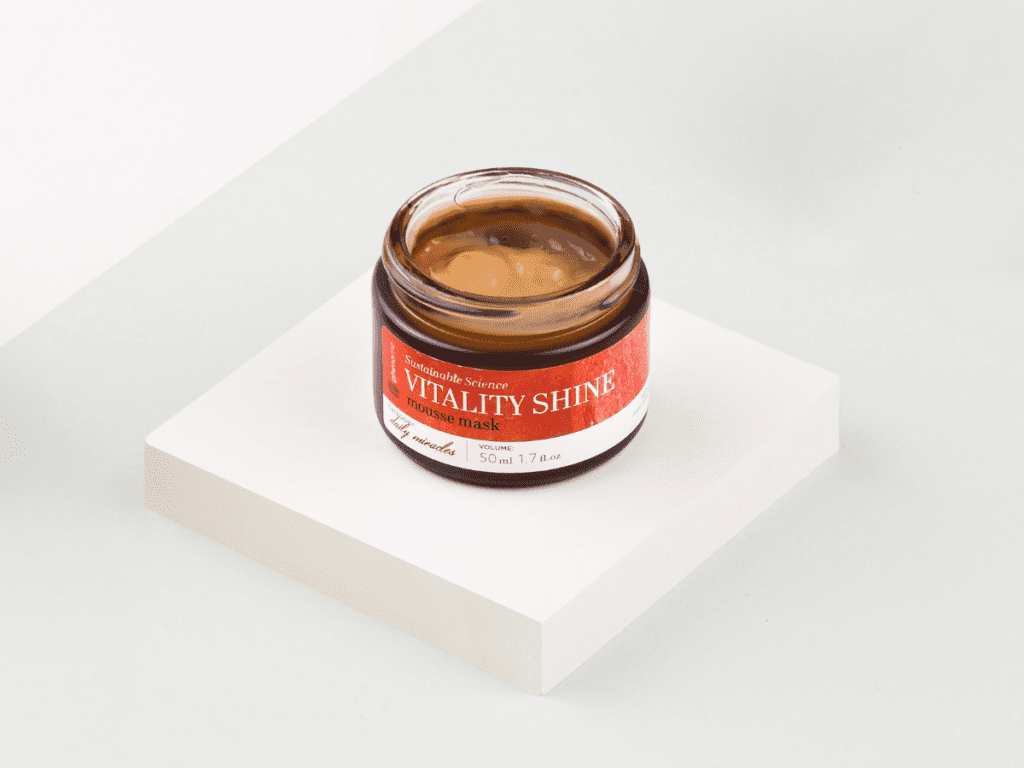
Most cosmetics contain water. Depending on the type of product (whether it’s a cream, serum, or toner), it makes up between 50 and 99 percent of the formula. And that’s great, because its presence allows plant extracts and essences to dissolve, as well as thickeners and glycols. The product’s consistency depends on its amount—light-as-a-feather creams for summer days contain more of it than protective balms applied to the nose before heading out to the ski slopes in winter. It’s worth knowing, however, that what ends up in the jar or bottle isn’t just ordinary water. It’s a biologically and chemically pure product, free of bacteria, viruses, or fungi. Most often, it’s demineralized, distilled, or deionized. Such water is completely neutral toward the other ingredients in the product, but also safe for our skin.
However, water prepared in this way is completely “empty.” That is why more and more scientists are looking for an alternative that would be just as safe to use but offer additional skincare benefits. Aloe vera hydrosol turned out to be the answer. It is obtained from organic aloe vera leaves through a distillation process, making it 100% natural. And most importantly: it is a highly concentrated product, containing as many as 200 beneficial compounds—more than almost any other product. The list of its properties is also exceptionally long: it moisturizes, soothes, tones, calms, and has anti-inflammatory effects. It supports skin regeneration. In the folk medicine of Africa and Asia Minor, where aloe originates, aloe-based products are used for burns because they accelerate wound healing and are used as a secret ingredient in anti-wrinkle treatments. And aloe hydrosol not only brings a wealth of active substances but also has all the benefits and advantages of water.
Aloe vera contains, among other things:
Cosmetics containing aloe vera hydrosol are suitable for all skin types. However, they will be particularly appreciated by those with high skincare needs—especially those with dry, sensitive, or irritated skin. And due to changes in modern life (air and food pollution, as well as constant stress), the number of people with such skin concerns is growing every year. Aloe vera hydrosol is used in cleansing gels and foams, but also in toners, creams, serums, and masks—products that we leave on the skin for longer periods—so that they act as a compress, providing soothing and moisturizing benefits, improving elasticity, and delaying the formation of wrinkles. Due to its high safety profile, cosmetics containing this hydrosol can be used by everyone, including children and pregnant women. The only contraindication to using its benefits is hypersensitivity to aloe vera.
Interestingly, the trend of replacing plain water with plant-based water is strong not only in the world of natural cosmetics, but across the entire skincare industry. We know that to keep the skin hydrated, we need to “hydrate” it from the inside as well. And it turns out that even here, it’s worth using water infused with plants, because it hydrates faster and for longer. Besides, many of us don’t like the taste of plain water and can’t quench our thirst with it. However, simply adding an infusion of herbs, slices of fruit, or juice—such as lemon juice—without sugar makes it a pleasure to drink as much as needed (depending on our weight, this is 1.5 to 2.5 liters of water). “Eating” it—in raw fruits and vegetables—is also a good idea.
Simply pinch a small patch of skin (on your cheek, forearm, or stomach) between two fingers, squeeze it briefly, and let go. If it smooths out immediately, your skin is properly hydrated. If the skin remains wrinkled like an accordion for a while, it’s a sign that it needs much more moisture—preferably from plant-based sources, consumed both internally and applied externally.