
Jak często robić peeling twarzy

How often should you exfoliate your face?

Facial exfoliation is one of the basic forms of skincare that helps remove dead skin cells, unclog pores, and improve the overall condition of the skin. Regular exfoliation can help achieve radiant, smooth skin, but on the other hand, improper frequency or the wrong type of exfoliant can do more harm than good. How often should we exfoliate our face, and which type is best for us? In this article, we’ll take a look at all the popular exfoliation methods, with a focus on the benefits of acid peels.

Types of scrubs

There are several basic types of exfoliants, each of which works on a different layer of the skin and has different properties. Understanding the differences between them will help us choose the right skincare method for our needs.

  1. Mechanical exfoliation This is the most popular type of exfoliation, which involves physically removing dead skin cells using tiny particles, such as ground fruit seeds, sugar, or salt. Mechanical exfoliants are available in both cream and gel forms. They work well for normal and oily skin, but may irritate sensitive or couperose skin. Using them too frequently can lead to micro-damage and weaken the skin’s protective barrier.
  2. Enzyme peel: This is a gentler form of exfoliation, suitable for sensitive and couperose skin. Enzyme peels work using enzymes derived from fruits such as papaya and pineapple. These enzymes dissolve dead skin cells without the need for scrubbing. This type of exfoliation can be used 1–2 times a week, depending on your skin’s needs. It is a safe option for those prone to irritation.
  3. Acid peels are one of the most effective and professional types of peels. They work by using acids that penetrate the skin at a deeper level, exfoliating dead skin cells and stimulating regenerative processes. Acid peels are classified as superficial, medium-depth, and deep, depending on the acid concentration and the type of substance used. They may contain AHA (alpha hydroxy acids), BHA (beta hydroxy acids), or PHA (polyhydroxy acids).

Benefits of an acid peel

Acid peels are becoming increasingly popular, mainly due to their versatility and effectiveness. They are particularly recommended for people who want to improve their skin texture, lighten dark spots, or get rid of fine lines. Below are the main benefits of using acid peels:

  1. Deep skin cleansing: An acid peel works on the deeper layers of the epidermis, so it not only exfoliates dead skin cells but also cleanses the pores. It’s the perfect solution for people with acne-prone or blemish-prone skin, as BHA acids (such as salicylic acid) penetrate the pores, dissolving sebum and impurities.
  2. Improved skin texture Regular use of acid peels helps smooth the skin, reducing fine lines and unevenness. AHAs, such as glycolic acid, stimulate collagen production, which helps firm the skin and give it a more youthful appearance.
  3. Lightening Discolorations Acid peels are often used to lighten post-acne discoloration, sunspots, and hormonal spots. Acids such as mandelic acid and lactic acid support the skin’s regenerative processes, accelerating the fading of pigmentation spots.
  4. Regulating Sebum Production Acid peels can effectively reduce excessive oiliness in the skin. Acids, particularly BHAs, help regulate sebum production, which helps reduce skin shine and the number of blackheads and breakouts.
  5. Promoting skin regeneration: Acids support regenerative processes, which help renew the epidermis. Regular use of acid peels makes the skin more radiant, supple, and healthier.

How often should you use an acid peel?

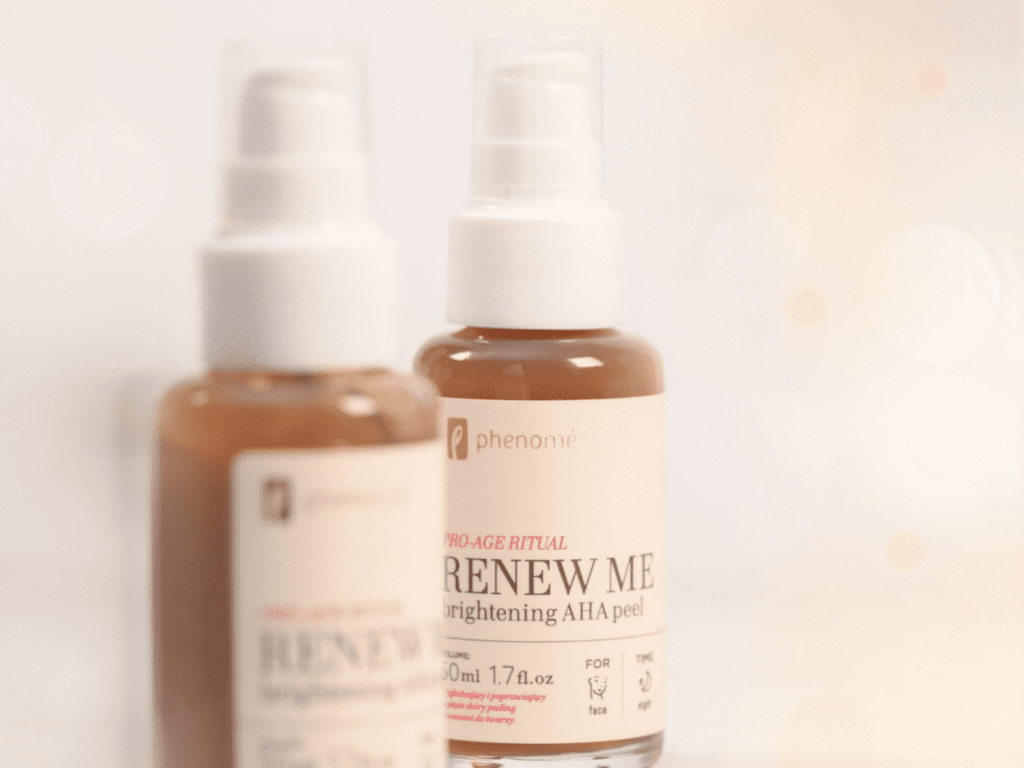
Our lightweight RENEW ME gel exfoliator is a blend of glycolic, lactic, and citric acids suspended in a lamellar gel. Apply a thin layer of the exfoliator in the evening to cleansed but slightly damp skin, massaging it in with circular motions while avoiding the areas around the mouth and eyes. Simply leave it on the skin for about 10–20 minutes, then rinse off with warm water. The best results are seen when using RENEW ME 2–3 times a week.
Keep in mind that acid peels can make your skin more sensitive to UV radiation, so it’s always a good idea to use creams with a high SPF, such as PROTECTIVE SPF30, after the treatment. Avoiding the sun after a peel is crucial for skin health and preventing hyperpigmentation.

Summary

Facial exfoliation is an essential part of a skincare routine, but its frequency and type should be tailored to individual needs. Mechanical and enzymatic peels can be used more frequently, while acid peels, though very effective, require caution and moderation. Their benefits, such as deep cleansing of the skin, reduction of discoloration, and improvement of texture, make them one of the most effective skincare treatments. However, the key to success is consistency and an understanding of your skin type and its specific needs.