
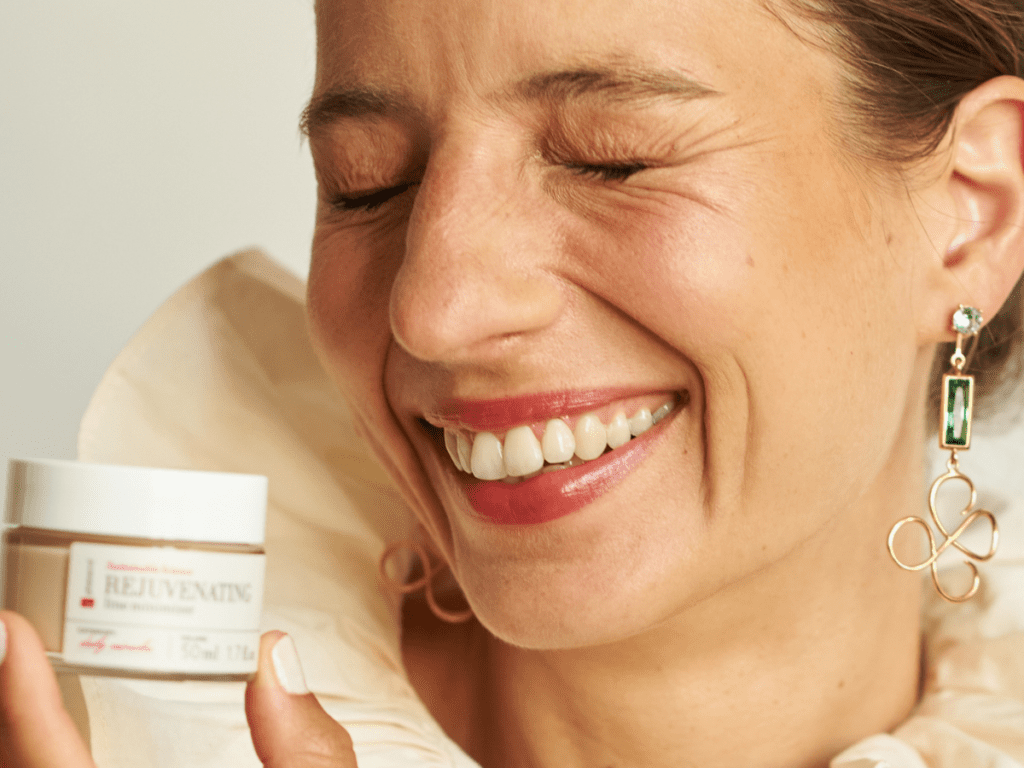
Aging isn’t our body’s way of “getting back at us” for how we’ve lived so far—it’s a completely natural process that can’t be avoided. Of course, we don’t all age at the same rate, and every choice we make affects how we feel and look over time. However, there are certain factors that have a much greater impact on our skin than others—they can either speed up or slow down the aging process.
Did you know that the skin is the largest organ in our body? That’s why it may come as a surprise that we often treat it as something completely separate from the rest of the body. The skin and the processes taking place within it are influenced by many factors—just as is the case with the heart, liver, or lungs. These factors can be divided into external (i.e., environmental) and internal ones. Lifestyle, diet, sleep, stress, and of course genes are all factors that determine how all our organs function, including the skin. So you can’t say that just one factor is the reason your skin looks less radiant or more tired than your friend’s. There are many variables that must always be taken into account. Skin aging, just like the aging of the entire body, is a very complex process
One of the most harmful external factors is UV radiation, which significantly accelerates the skin’s aging process. Sunscreen is a must, regardless of the season. In summer and spring, we are primarily exposed to UVB rays. Unfortunately, at our latitude, UVA radiation reaches us all year round. What’s more, it also penetrates window glass, which is why we’re exposed to it even when indoors. You might wonder, of course, why the sun has “suddenly” become one of the skin’s enemies, even though our mothers and grandmothers didn’t place such importance on protecting themselves from it. Fortunately, advances in medicine also influence other fields—including cosmetology. Thanks to more research, such as studies on the impact of radiation on melanoma development, we know how important year-round skin protection is. UV radiation also causes photoaging, which is one of the mechanisms of skin aging. It manifests mainly as discoloration and age spots. Sunscreen is effective protection that we shouldn’t neglect—especially since it can positively impact our appearance.
Maintaining healthy-looking, youthful skin is a goal many of us strive for. And while the aging process cannot be stopped, there are several factors that can slow it down slightly. One of these is antioxidants—substances that neutralize free radicals. Look for them in creams or serums. These include vitamins C and E, as well as resveratrol and superoxide dismutase. Cosmetics containing antioxidants are recommended for everyone, regardless of age, as part of a daily skincare routine. Free radicals form in our cells every day, and many factors—such as UV radiation—intensify this process. Remember that when antioxidants work together synergistically, the protective effect is even greater. That’s why you should look for cosmetics that contain not just one, but at least two antioxidants—just like in the PRO-AGE line.
Don’t forget that you can supply your body with antioxidants not only from the outside, but also from the inside. Regular supplementation is one way to ensure you get the antioxidants you need. You can replace them with juices—for example, beet juice. It’s a true antioxidant powerhouse that will positively affect the appearance of your skin and also reduce the risk of DNA mutations. As Monika Krzyżostan, head of Dr. Kozie’s laboratory, notes: “There are plenty of studies confirming that drinking beet juice daily significantly slows down the process of cancer development.” Our skin does not exist in a vacuum. It is an organ influenced by many factors—including diet. This is indicated by various studies, such as those linking the gut microbiome to the condition of our skin. “All kinds of atopic conditions—atopic dermatitis or allergies that we observe on the skin—are linked to the gut microbiome. Not just the skin microbiome, but also the microbiome found in our intestines.”
Skin hydration is another factor that can influence the aging process. Water is essential not only for the proper functioning of the entire body, but also for the functioning of every single cell. Monika points out that “the more water there is in the cells, the better hydrated the skin is, and the smaller and less visible the wrinkles will be. The skin will be smoother. It also won’t have that gray, unhealthy complexion.” How should you hydrate your skin? Cosmetics containing moisturizing ingredients—such as hyaluronic acid or aloe leaf juice, which form the basis of Phenomé products—can certainly help with this. It is used instead of demineralized water in cosmetics to improve the skin’s hydration level. Hydrated skin not only looks better but also becomes much more “absorbent.” Keratinocytes—the cells that produce keratin and form the stratum corneum—spread apart precisely when the skin is well-hydrated. This creates “channels” between them, through which nutrients and active ingredients can freely penetrate into deeper layers. Cosmetics work much better, therefore, when you prioritize hydration—not only through creams or serums, but also by drinking an adequate amount of water daily. The skin begins to age around the age of 25. This is precisely the time when you need to start a proper and consistent skincare routine focused on hydration and protection against free radicals. However, don’t forget about other factors, such as a healthy diet, getting enough sleep, and managing stress. A comprehensive approach to skincare can truly help you slow down the aging process that has already begun.