
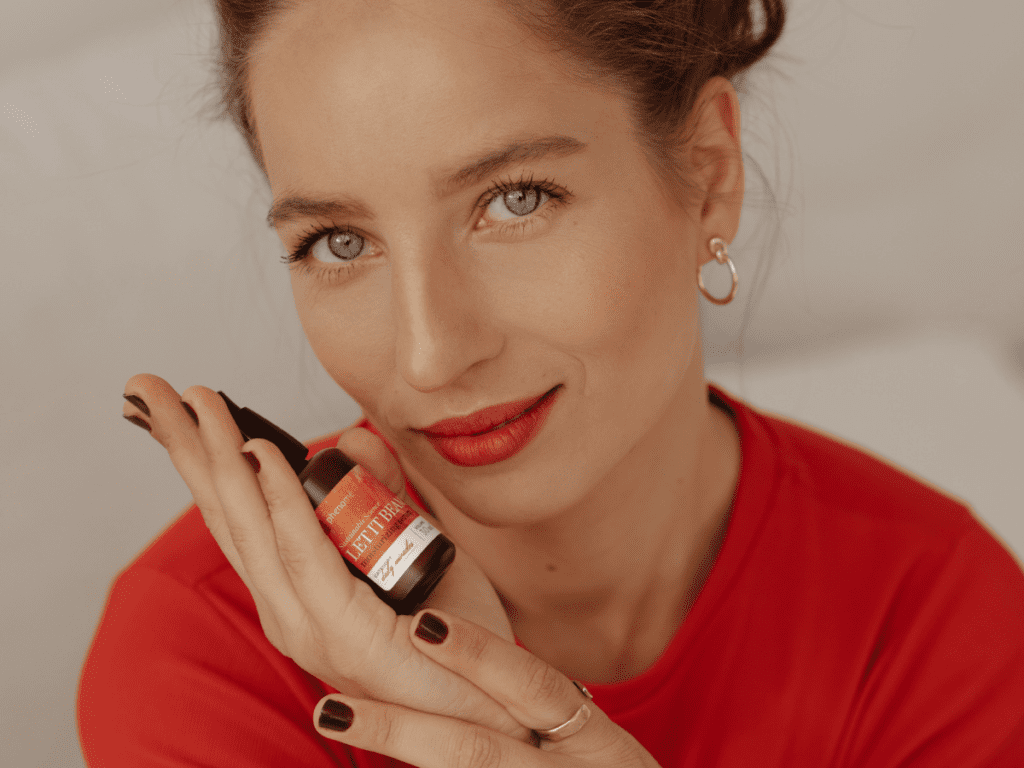
In the light of the spring sun, you can see how dry, sometimes irritated, undernourished, aged, and almost always dull it is. How should you care for your skin after winter? As soon as possible! But be careful, because the devil is always in the details when it comes to skincare.
Exfoliation is a quick way to smooth and brighten your skin, as well as a first step toward proper skincare. It removes dead skin cells and impurities from the skin’s surface. But don’t be tempted to go overboard with your spring “skin cleanse.” Quite the opposite. After winter, the skin is simply weakened and prone to irritation, so the ideal exfoliator should be—first and foremost—appropriately gentle. Second: suited to your skin type. For oily and healthy skin, fine particles like sugar or rice powder are recommended; however, if there are inflammatory changes or the skin is very sensitive, enzyme peels are advisable. For the body, exfoliating sugar or shell particles work great, preferably combined with nourishing oils. Interestingly, while many of us are familiar with this distinction, practice shows that few of us actually follow it. Most often, we choose scrubs… that smell nice and have a pleasant texture. Does that sound frivolous? Not entirely. It turns out that experiencing pleasure is an important factor; it enhances the effectiveness of skincare. After all, when applying our favorite product, we relax our muscles, and we perform the act itself for longer, more attentively, and—most importantly—much more regularly.
Ritual:
We should exfoliate the body (e.g., using the NOURISHING Sugar Body Scrub) 3–4 times a week. Exfoliate the face twice a week, after thoroughly cleansing it. Always double-cleanse the skin using a foam or gel (simply wiping it with micellar water only spreads impurities around). And remember to follow the recommended time for leaving the scrub on the skin. Exceeding the recommended time, especially if the product contains acids, can irritate the skin.
To further revitalize the skin, let’s give it a massage during or after exfoliation. Apply pressure in a circular motion toward the heart using your fingers or a dry brush with soft, natural bristles. Massage the face with your fingers (or a special roller) from the nose toward the ears. This drainage technique helps eliminate lymph and water retention, and at the same time helps the skin absorb the beneficial ingredients in your skincare products. After the draining facial massage, it’s a good idea to do a short firming massage. Using your fingertips, gently pull the skin from the jawline almost to the temples, repeating this several times. Be careful, however, not to stretch the skin, but rather to press on the muscles directly attached to it. This “exercise” will stimulate the cells, improve skin tone, and give your face a fresher, more youthful appearance.
After completing these steps, pat the toner into your skin. Even a small amount is enough to adjust its pH. Why is this so important? Because it ensures that none of the ingredients in the products you apply afterward will neutralize each other.
Tip: The best (and most economical) way to apply toner is to pat it in with your fingers, which also gives you a nice little massage. If you pour toner onto a cotton pad, you’ll end up wasting a lot of the precious liquid.
If you always set up your laptop or ironing board after applying a face mask—to make better use of your time—maybe you shouldn’t do that now, as part of your “post-winter cleanup”? Pamper yourself like you’re at a spa. Apply the mask to your prepared skin—cleansed and massaged. If it’s a cream, spread it well and gently pat it into your skin; if it’s a sheet mask, press it firmly against your face. Now lie flat on your back and stay that way for 10 minutes. This will allow not only you to relax, but also your facial muscles, and it will help clear away any congestion. You’ll see the difference right away.
No other beauty product works as intensely as a face mask, which can deliver a wealth of active ingredients to the skin in just a few minutes. It is also the only one that provides immediate results, as well as long-lasting benefits when used regularly.
Ritual: During periods of intensive skincare, it’s a good idea to apply it before bed to support the skin’s regeneration process, which is most active at night.
However, for the skincare products we use to truly help regenerate our skin, they should be rich in nutrients. Tired, dull skin, weathered by wind and frost, will particularly benefit from a vitamin compress. Vitamin C, our natural antioxidant, will add radiance, improve firmness, and strengthen the epidermis in preparation for the sun exposure that awaits us any moment now. It’s also worth taking advantage of the benefits of vitamin A (which stimulates skin renewal and improves elasticity), vitamin E, which fights free radicals, as well as soothing d-panthenol and allantoin.
Skincare routine: It’s a good idea to use vitamin-enriched skincare products every day—whether in creams, masks, or serums applied under your moisturizer in the morning and before bed. However, when using products containing vitamins C and A (retinol and its derivatives), be sure to use additional sun protection.
Skin weakened by the long, cold months—especially on the face—is easy prey for the sun’s increasingly intense rays. While we should apply sunscreen all year round, it’s especially important now. But let’s forget about low SPFs—it’s like putting on a lace coat: it’s there, but it doesn’t protect. The ideal sun protection factor is no less than SPF 30, and from the first rays of spring through the entire summer—SPF 50.
Routine: Apply sunscreen every morning—SPF 50 starting with the first rays of spring—and reapply throughout the day.
Many of us have dehydrated skin after winter. This happens when we don’t drink enough, we sweat, and the dry air in heated rooms further draws moisture from our bodies. Dry lips can be a sign of dehydration, but the simplest test for water deficiency is to pinch (with your thumb and index finger) the skin in an area where there isn’t much underlying fat—dehydrated skin doesn’t spring back immediately. To properly rehydrate it starting today, right now, it’s worth drinking more fluids. But not 2 liters a day—after all, we differ in weight and size, and it doesn’t necessarily have to be water. Water, especially when drunk quickly, only speeds up the trip to the bathroom. To properly hydrate your cells—and give them something extra—it’s best to drink “water+,” meaning water with added herbs or a small amount of juice. These can be infusions, smoothies, or homemade isotonic drinks (squeeze lemon juice, a pinch of salt, and a tablespoon of honey into 1.5 liters of water, stir, let it sit for a few hours, and drink). A good way to boost hydration is to eat raw fruits and vegetables; the water they contain stays in our bodies the longest.
Daily routine: In the morning, on an empty stomach, drink a glass of warm water with lemon or an isotonic drink; before lunch, drink a cup of your favorite herbal tea. After every cup of coffee, which increases urine output, drink half a glass of water to replenish fluids.
Today we know that diet is also part of skincare. What we eat—even if it’s the last step—also affects our skin. In winter, we tend to eat less strictly—because of the holidays, because we crave warming dishes in sauces, and because the low mood caused by the lack of light is best lifted by starchy foods and sweets. This isn’t good for us or our skin—it isn’t as soft and smooth as we’d like it to be. The ideal diet for the skin (as well as hair and nails) is one rich in vitamins, antioxidants, and omega acids—that is, raw vegetables, fermented foods, and grains, seeds, and oils; if meat, then from organic farms, plus fatty sea fish. If we want to improve our skin’s appearance as quickly as possible, before spring, it’s worth completely overhauling our diet for at least three weeks, especially by eliminating potentially harmful products: processed foods, those with preservatives, artificial additives, or trans fats. We’ll notice a difference after just that short time. A trick for quickly improving your skin’s appearance is to drink freshly squeezed vegetable and fruit juices (preferably organic) in the morning that contain vitamins A, E, C, and carotene (carrots, beets, kale, etc.). Carotene gives the skin a healthy glow and radiant appearance after just a few days of consumption, and it also promotes skin regeneration. It stimulates the activity of fibroblasts—the cells that produce collagen, which is essential for maintaining firm skin.
Ritual: Plan your meals in the morning. And savor your meals—by eating more slowly and mindfully, you’ll better absorb the nutrients they contain.
Moderate exercise benefits the entire body, including the head and the skin. As blood pressure rises and the heart rate increases, oxygen and nutrients are transported more efficiently to all the body’s cells. As a result, the skin better absorbs the nutrients provided by cosmetics and food, gains a healthy glow, and improves its firmness. Additionally, through sweating, the body eliminates toxins, including those from the skin. The right amount of exercise affects skin parameters, which is particularly important during the perimenopausal period, when skincare becomes more demanding. But the amount of exercise really should be appropriate, because intense physical exertion (more than 90 minutes a day with a significantly elevated heart rate) can have the opposite effect of what is intended. Due to the impact on the skin of a high dose of free radicals released during intense cardio exercise, the degradation of collagen and elastin fibers is accelerated. This, in turn, causes premature aging and sagging of the skin, a condition sometimes referred to as “runner’s skin.”
Ritual: Find at least 15 minutes each day to get moving. Don’t like exercise? Run up the stairs, walk briskly to the store, turn up the music and dance, and try to walk as much as possible.
Sources:
Alicja Wiśniewska, Marek Napierała, Małgorzata Pezala, Walery Zukow, “The Effect of Physical Activity on the Psychomotor Functioning of Menopausal Women,” *Pedagogy and Psychology of Sport*. 2015;1(1), p. 43.
Nutrition Education Center, Warsaw University of Life Sciences (SGGW), “What Factors Affect the Appearance of Our Skin?”, p. 24, available online at http://www.wszechnica-zywieniowa.sggw.pl/web/slajdy_uroda.pdf (February 18, 2020).